The Dangerous Middle
From Conflicting Seas to Serene Solitude: Sailing the South Pacific's Most Unreliable Passage.

Sailors have a wonderful habit of taking parts of the ocean that lie happily nameless and renaming them into far more menacing and frightening names. One such name is ‘The Dangerous Middle,’ a passage which forces the ‘milk-run’ sailors, who have just completed a relatively uneventful Pacific Ocean leg across the South Pacific to French Polynesia, to immediately shed their complacency and sharpen their focus.
The reason for its namesake is that it’s known for its extremely unsettled and unpredictable maritime conditions. Driven by the persistent presence of the South Pacific Convergence Zone (SPCZ), this volatile area causes the steady trade winds to become unreliable, often yielding sudden squalls, low-pressure systems, and strong wind shifts. It’s notorious for wildly inaccurate weather predictions, meaning you have to rely solely on reading the weather in front of you.
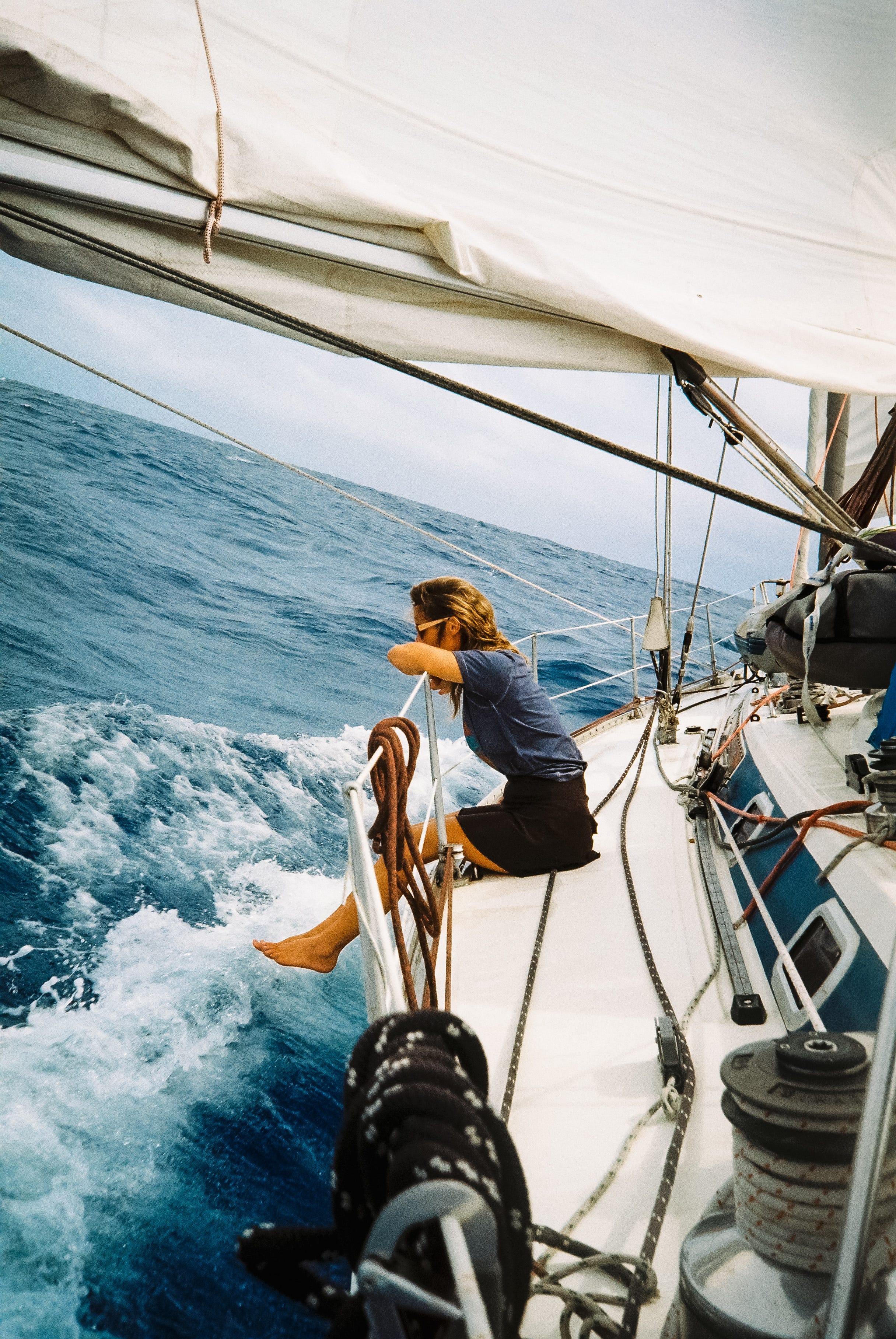
We’d already been treated to a delightful preview of this on our sail north from Tahiti to Raiatea, when the forecast had anticipated light and fair winds with no rain. The reality was being relentlessly poured on in a 30-knot+ thunder and lightning storm for hours on end.
We started the passage from Bora Bora rather uncomfortably where big ocean swell fought against its rebound from the surrounding islands. The wind that we needed to fill our sails and drive us through the sea state was not apparent and caused the rigging and sails to bang and jar—a shuddering sound that pains any boat owner to hear. We resorted to dropping all sails and turning on our protesting engine, making for a slow, noisy start.
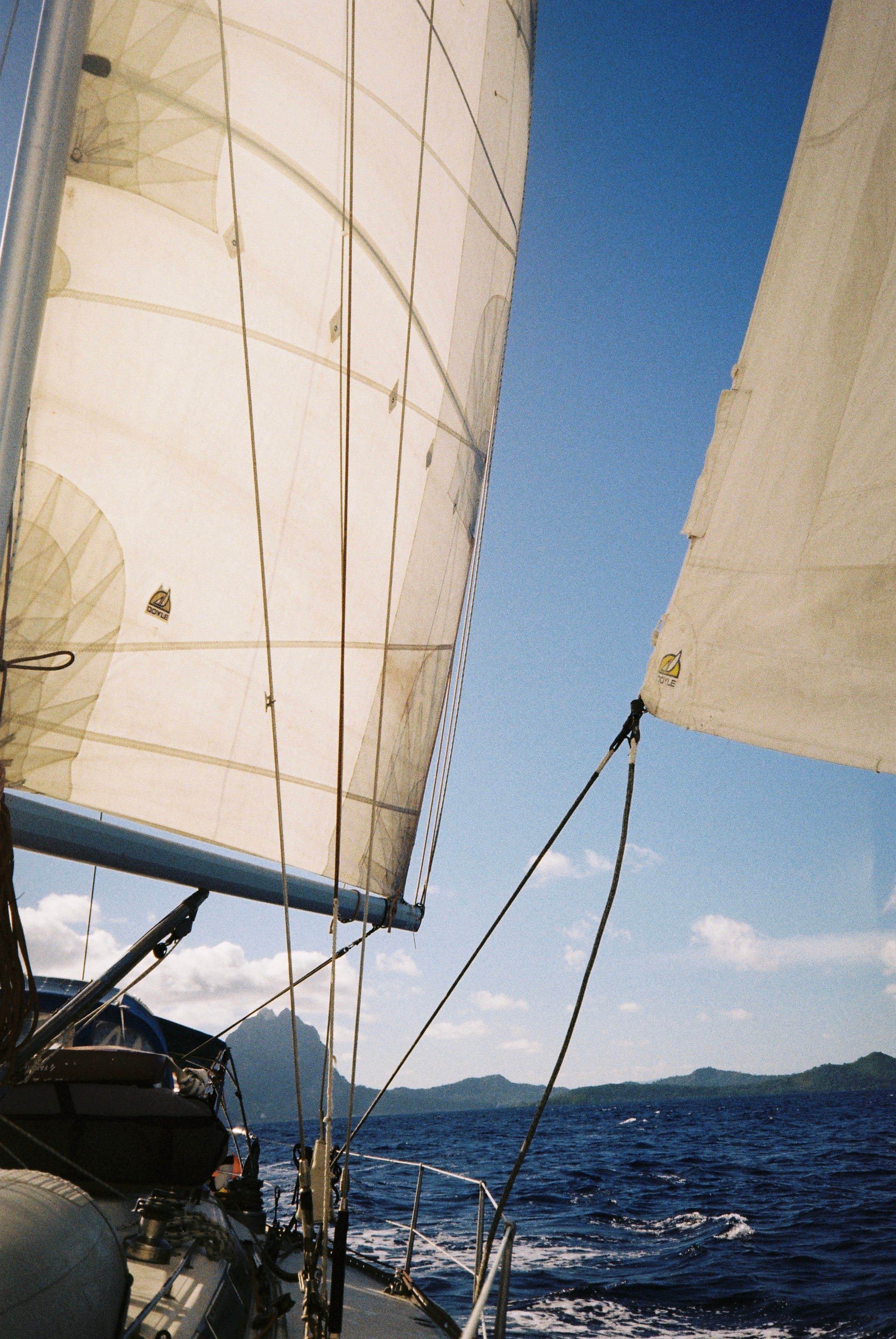
The swell eventually died down and the wind filled in, allowing us to hoist all our sails and head in the right direction. Knowing that we couldn’t rely on any forecast, we felt like we would jinx things by saying it aloud, but we appeared to be having some excellent sailing. Not too fast, not too slow, everything was just right. Slowly our shoulders untensed, and we stopped questioning if the radar was working when we couldn’t see any cloud activity. The only sound was the soothing rush of water along the hull. Perhaps this Dangerous Middle didn’t always have to be quite so dangerous? The next week or so at sea was some of our nicest time out in the ocean. We didn’t see a single thing, barely a cloud, no boats, no wildlife, and no fish. It really was just us, suspended bang in the middle of the Pacific Ocean.
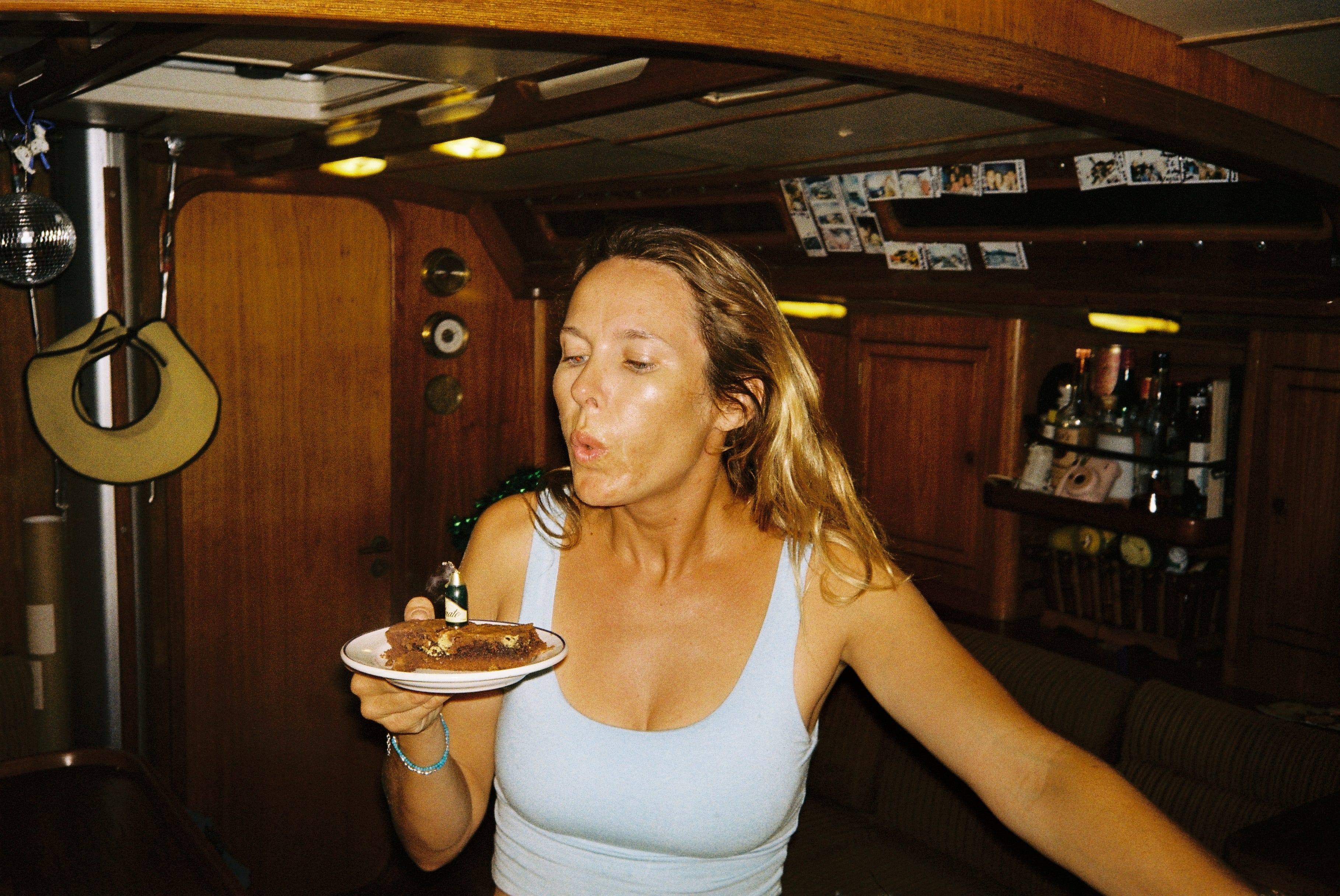
We had an action-packed couple of days as we celebrated Charlotte’s birthday with decorations in the cockpit, birthday brownies, champagne from Bora Bora, and a movie at sunset—a truly unique event. The following day we sailed through the Dateline, meaning a date vanished from our logbook, leaping us 24 hours ahead—a temporal trick only open to ocean travelers.
We often feel an offshore passage tests you right at the end, just as you’ve got comfortable, and this was no different. The wind picked up for our final three days at sea, and we were keeping a close eye on satellite images to dodge electrical storms. Sailing wing-on-wing with a poled-out genoa, Jacqeau felt balanced and good, managing the large, short waves with grace.
After a sleepless final night, we were rewarded with the incredible feeling of seeing a new land. No matter how long we do this, it’s always one of our favourite moments; arriving by sea, having battled the elements, feels like you have truly earned the right to explore the magnificent country ahead of you.